Friday, January 24, 2014

Accessories as You Like Them


Program this light if you want.


Cars today are jam packed with whistles and bells of every manner. This is true both literally and figuratively. Of course we the consumers have brought this upon ourselves because we like being surrounded by fancy features.

The number of warning lights, chimes, beeps, and other sights and sounds has reached a level where most people don’t even know what some of them mean. Many times theses warning buzzers will sound at times that can make the driver completely insane.

All new cars and trucks have many other features that are now more automated then they used to be. Things like power door locks that lock automatically when the vehicle exceeds five miles per hour, and unlock the doors when the transmission is shifted back into park are very common on all new cars.

Something most people do not know is that many of these features can be customized in the way they operate. If you don’t like the way the seat belt warning beeps at you every thirty second when you are not wearing your seat belt, it can be set to a mode that only allows the light to come on once after the car is first started and then shut off never to bother you again.

Things like automatic doors locks can be completely disabled if you like. Maybe you want the doors to lock when you shift into drive instead of when you hit 5 miles per hour. Most cars can have this type of thing changed very easily.

Since everything on cars and trucks today is computer controlled, it is very simple to give the computer different instructions on how and when to automatically activate one system or another. Besides programming things like power windows and door locks, other things can be changed such as what size tire you have on the vehicle. The size of the tire relates to function and accuracy of the speedometer. If you have a truck on which you install bigger tires your speedometer is now going to be off a couple of miles per hour. However, the bigger tire size can be programmed into the computer that calculates speed and then your speedometer will be accurate again.

Generally speaking there are two different ways to program these features. The easiest and perhaps best way is to use a scan tool. This is the device that the auto shop uses to communicate with the various computers on your vehicle for diagnostic purposes. On today’s cars these tools can be used for programming purposes as well. The factory scan tool that the dealerships have will always have to most capability when it comes to making these types of changes.

These tools can not only be used to program the function of a warning light or buzzer, but they can also be used to program major accessories. A feature such as cruise control can easily be added to a vehicle that did not come equipped with it from the factory. All that must be done is to have the switch installed in the steering wheel or the dash, and then use the scan tool to tell the engine control computer to enable cruise control programming. All of the other hardware the cruise control needs to operate is already there serving other purposes. With the correct switches and the correct programming, these components can then be used by the computer to provide cruise control.
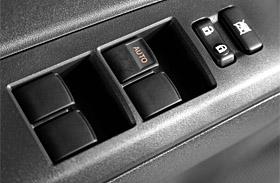
The other way to make more minor changes to accessories is to follow a special programming sequence. Using things such as the ignition switch and power window or door lock switches, or maybe the park brake lever or climate control buttons. An example of how a programming sequences would work with these devices might be something such as: turn on the ignition switch, hit the unlock button, turn the ignition switch off, turn the ignition switch back on, hit the lock button, then pull and release the park brake lever two times and listen for the dash to beep at you. Once the dash beeps at you the vehicle is in programming mode and you can push the fan speed up switch to make your selection. Once the selection is made, turn the ignition switch off to reset the system.

This sounds like some kind of crazy secret code and perhaps it is, but it provides a way to program these features without having to use a special scan tool. Once in a while the owner’s manual will actually tell you how to do some of these things but most of the time it won’t. These programming sequences can usually be found online, but the best place to find them is in the factory service manual. Sometimes even this will not have the information on programming. Sometimes these things are only known to the engineers.
Watching a movie on this screen might be hazardous
to your health.

For example a few auto manufacturers who shall remain nameless, have some models equipped with navigation systems and rear seat DVD players. When movies are played and showing on the screen for the rear seat passengers, if you know the proper programming sequence you can make the movie play on the navigation screen where front seat passengers can also see it. The manufacturers made this possible for the purpose of performing network data bus diagnostics. The service manual won’t tell you any of this but the information is easily found online.

So if you have some whistle or bell on your vehicle that annoys you, or just doesn't work the way you wish it would. Do a little research and find out if it can be changed. If you paid so much money for this car you ought to have the accessories work the way you would like them too. 

Saturday, January 11, 2014

Indy, America’s Racing Paradise


Just about any self-respecting car nut will tell you they have a bucket list of places they must visit to pay homage to these silly machines they love. Chances are the list would include places like the Henry Ford Museum, in Dearborn, Michigan, or perhaps attending speed week at the Bonneville Salt Flats of Utah’s west desert. Another amazing place that would have to be on the list would be the Indianapolis Motor Speedway and Hall of Fame Museum in Indianapolis, Indiana. Recently, the car nut that writes this column was able to visit this sacred ground while vacationing with the family. This was a great destination for the family, even my moody teenage daughter had a good time there.

The Brickyard as it is affectionately known was originally built in 1909 by a couple of early car nuts. Why is it that anytime some new technology hits the market, it’s not long before someone decides to see how fast it will go? The track was dirt to begin with but was almost immediately repaved with bricks, 3.2 million bricks to be precise. This is why it is called the brickyard. Over time the bricks were slowly replaced with asphalt until 1961 when the last of the bricks were paved over.

The famous bricks of the "Brickyard."
Today the start/finish line is marked with three feet of the original bricks. Since 1996 it has become customary for the winner of any of the races that take place on this circuit to ceremoniously stoop down to kiss the bricks before ascending the winner’s podium. Of course yours truly was not about to be left out. Although I didn't win a race at Indy, I did feel the need to participate in this sacred right while touring the facilities.

This track hosts three big races each year: the Indianapolis 500 of the Indy Car Series, The Brickyard 400 of NASCAR, and the Indianapolis GP of the MotoGP motorcycle racing series. In the past the American Grand Prix of Formula One has also been held there, but that race now happens elsewhere.

Of these big events the one with the most history is of course the Indy 500. Other than a few years during times of world war this event has occurred every year for over 100 years. Because of the history and tradition that surrounds this race; the Indianapolis Motor Speedway has a museum and hall of fame dedicated to the driver’s and their machines that have won this historic race.

Vintage racers in the Hall of Fame Museum.
These were all winners 100 years ago.
The museum houses most of the original winning cars from the last century, all displayed side by side. The evolution of the race cars at Indy is very easy to see as you walk up and down the many aisles. I was told by one of the guides working in the museum that all of the cars still run, and are still just as track worthy as they were on the day when they won the coveted Borg-Warner trophy.

They said the cars are taken out on the track occasionally to burn the cobwebs out of them, and for photo ops. One of the old race cars was on the track a couple of years ago and suffered a major engine failure. No problem, the museum employs mechanics to take care of such things and they were able to get everything repaired, even though they had to custom fabricate a few of the parts that were needed.

When visiting the Indianapolis Motor Speedway you can check out the museum, go for a ride around the track with a tour guide, or you can do the deluxe tour. Obviously the latter is a must for anyone who really wants to see the facilities. This all inclusive tour takes you out on the track where you can get out and wander up and down the main stretch, kiss the bricks, and tour the various media centers and garages.


If you are a truly devoted fan you would come back Memorial Day weekend to be one of the quarter million fans in the stands watching the Indy 500. I suppose that will be the next thing on my list.

The fastest car to ever turn a lap at Indy.  This happened back in the late 90's when they still allowed turbocharging.

View of the main straight from the luxury suites.


The Borg-Warner Trophy. For the winner of the Indy 500.
Indianapolis Motor Speedway control room. Nobody goes in or out of this room one the race begins. Notice all
of the VCRs below the monitors. Nothing is recorded digitally so the official record of the race cannot be tampered
with or secretly transmitted out of the room for tampering.
The famous Gasoline Alley. This is where the garages are located.
The back stretch.
The start/finish line. The line of bricks goes all the way through the pits.
The media room where reporters from around the world keep track of the race. Your humble blogger is pictured. 
Where winners and losers get a chance to tell the tale to the media.
Headed towards turn 1. The tower shows who is currently winning and losing.
The world famous Pagoda.

Wednesday, January 1, 2014

Forever Fluid


One of the top priorities of automotive engineers today is to make vehicles that require less maintenance. In this they have done an excellent job making cars last a long time without all the routine visits to the mechanic for nothing more than preventative maintenance. When a vehicle requires less maintenance it is cheaper for the owner, and less of a hassle. The auto manufacturers know that people want to buy cars that require less maintenance so they have engineered them this way.

Spark plug changes are only due every 100k miles or so, drive belts last a very long time, and even the old oil change really doesn't need to be performed as often as it used to be. The modern automobile is the most trouble free, and maintenance free contraption ever built by the hand of man. Heavy-duty trucks, heavy equipment, and other similar vehicles of the modern era are not as trouble free, and maintenance free as the automobile.

Lately however, it seems as if engineers have taken things a little too far when it comes to reducing preventative maintenance. Now, it is very common for a vehicle to have lifetime fluids. This means that some of the fluids on some vehicles are said to be good for the life of the vehicle. One of the most common lifetime fluids is transmission fluid.

With advanced technology in the processing of petroleum products we now have many types of automotive fluids that are labeled synthetic. This title usually refers to the way they are produced. Advanced processing methods give the end product better properties for performing the function for which it was designed. One of the abilities of these new synthetic fluids is greater longevity in the gear box or other mechanical assembly where it works to reduce friction and condition parts. These fluids do last longer.

The term lifetime in reference to fluids is somewhat misleading, and really rather vague. What is the definition of lifetime? Are they talking about the life of the vehicle, the life of the owner, or maybe just the life of the warranty? Maybe they mean the lifetime of the fluid itself. As if to say the fluid has a lifetime, and they are proposing that the fluid doesn't need to be changed until its life has run out. That would be very misleading.

The other thing that is a bit beguiling is many times forever fluid only applies to vehicles that follow the normal maintenance schedule. Most vehicles still use a normal and a severe maintenance schedule. The idea is to follow the one that applies to you. Of course based on the definition of each schedule just about everyone is severe.

The problem with lifetime fluid in this case is the normal schedule calls many fluids lifetime fill. So if you live in Florida and never drive too fast, or too slow, or too little, or too much, then you never have to replace the transmission fluid, or the differential fluid, or the power steering fluid. If you are severe like 99% of drivers, the fluid must be changed according to the recommended interval.

Some vehicles literally do not give any recommendation on the service interval of their lifetime fluids. The engineers literally mean to say that the fluid never wears out. This of course cannot be true but to the original owner of the vehicle who keeps it for 10 years or 120k miles they really do not need to worry about fluid service.

So, if you purchase a vehicle with transmission fluid that is lifetime fill, when do you need to possibly have the fluid serviced anyway? A reasonable interval for servicing just about any type of alleged lifetime fluid is about 100k miles. This is not really all that bad because it might mean that the average used car buyer still has to only service the fluids of this vehicle maybe once in the time they own it. Automotive engineers have done a good job of reducing maintenance costs on cars, but they will never eliminate the need for fluid service.  

Sunday, December 22, 2013

The Death of the CD Player

No CD slot here.
Car audio goes back a long way. Ever since Motorola made the first car radio back in 1930, we have enjoyed listening to just about anything while driving down the road. In the 50’s Chrysler even tried putting record players in many of their high end models. These required a very smooth road and some even had a special rotational speed that required you to buy records form the dealership. They were not your standard 45’s. It’s hard to imagine driving along listening to a stack of vinyl while trying to avoid even the smallest bumps in the road.

When I was a kid, and I mean a little kid, I remember cruising around in the old Dodge van that mom drove listening to 8 track tapes purchased from a local second hand store. The likes of Barry Manilow, Barbara Streisand, and the soundtrack to the Broadway show Hair could be heard loud, and somewhat clear from the two speakers in the dash. We even had a random speaker attached to a wire just floating freely under the back seat of the van. I used to lay on the floor underneath the 3rd seat with my ear to this speaker, rocking out as any 8 year old would. 
Nothing like getting lost on the eight tracks
of one continuous tape.
Now before you get the idea that I am that old, I need to remind you my parents drive really old cars. Growing up in the 80’s the old cars had 8 track players and the newer, fancier cars had cassette decks. Before long we too had a cassette deck in our Pontiac Parisienne station wagon. The U2, Joshua Tree album sounded really good, as did Depeche Mode, Metallica, and the sound track from the Phantom of the Opera. We listened to a wide variety of music. 

I don’t remember exactly, but I think that I had moved out of the house by the time my parents had a car new enough to be equipped with a CD player, in fact I’m fairly certain that I bought a car new enough to have a CD player before my parents ever did. This medium, and the stereo in which it plays, has been standard equipment on most vehicle for a much longer time period that anything else, but now that is slowly changing.

The CD player is dead as the standard audio player of choice in cars today. Honestly it has been dead for a few years now. I can’t remember the last time I used the CD player in any of my cars, I’m pretty sure it’s been years. Today we are to the point where auto manufacturers and even the aftermarket stereo manufacturers are selling car stereos that have no compact disc player.

The CD long box. In case you are
too young to remember
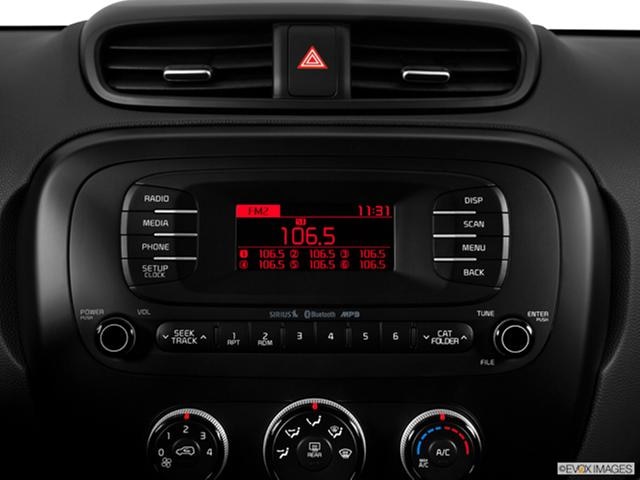
Some cars like the new Jeep Cherokee or any Cadillac, still offer a CD player but its hidden somewhere out of the way and no longer mounted in the dash. If you buy something like a Chevy Spark, or a Kia Soul there is no option for the optical audio drive. These cars come with more modern ways of listening to music, or “books on tape.” Cars such as the Spark are designed and built for the youngest drivers among us and this generation is comprised of people who have probably never purchased a CD from a music store and definitely have no idea what a “long box” is.

For many years now most new cars have been equipped with auxiliary audio jacks that allow any MP3 player to play through the stereo. USB ports are also common on most models to allow a direct interface between the car stereo and your iPod or thumb drive. Why carry a big stack of CDs when you can just carry a tiny iPod Shuffle.

Getting even more modern than this, now many cars are equipped with infotainment systems capable of streaming audio via cell phone and Bluetooth. Paring your phone to the car allows you to take advantage of services and apps such as Pandora or I Heart Radio. Some cars even come with a very large flash type hard drive so you can transfer all of your audio and even video files to the car where they are permanently available for play back through the stereo and rear seat video entertainment systems.
Not CD slot here. 2014 Kia Soul

The death of the car CD player will be somewhat slow as it’s expected to be available for a few more years, particularly in vehicles meant for the more seasoned driver. The cassette player died a slow death as well back in the day. The last year this feature was offered in any new car was 2010 and its amazing it lasted that long. I think the CD player will be gone by 2017. I guess we will all have to move on. At least AM and FM hasn’t changed…yet.

Thursday, August 22, 2013

Ethanol, E85, and Burning Your Food


In our modern day we are constantly being bombarded with the potential for new fuel alternatives that we can use to run our vehicles, or that we might soon be able to use to run whatever car or truck we might have in the future. One of the new technologies, or perhaps not so new is ethanol.

Ethanol works well as a fuel additive because it increases the octane rating of gasoline and it helps it to burn cleaner. When used as the primary component of the fuel, and not just an additive we usually refer to it as E85. This is a mix of 85% ethanol and 15% gasoline. Cars that are labeled “flex fuel” are capable of running on gasoline, E85, or any mixture of the two. These flex fuel vehicles are actually very common but most people who own them never run them on E85 and likely don’t even know that they can.

As an additive it’s great, as a fuel it leaves much to be desired. Ethanol takes so much energy to produce and provides so little energy in return that it is not very practical as a fuel. While it may be impossible to calculate the exact amount of energy return from E85 production, some experts say the return of energy with the production of E85 is actually negative.


Not everything about E85 is bad. The octane rating is somewhere in the neighborhood of 110 which is great. This makes it possible to produce a lot of power with E85 as a fuel. E85 is also completely renewable since it is derived from plant sources that are easy to cultivate. E85 burns very cleanly and produces fewer emissions than petroleum based fuels. If E85 is spilled or otherwise released into the environment it is much less harmful than most of the other fuels that we use.

The problem lies in the fact that E85 is not as energy dense as gasoline or diesel fuel. Because of this lack of energy things such as fuel economy suffer when running E85. Take the average midsize sedan that is flex fuel capable, with a V6 engine. Typically a car like this will be able to achieve a combined fuel economy rating of about 25 or 26 mpg. The exact same vehicle running on E85 will achieve about 14 or 15 mpg. Power output will feel the same but the engine will burn a lot more E85 to produce the same amount of power that the gasoline produces. The nationwide average price per gallon of E85 is currently $3.23 per gallon, while gasoline is $3.93. E85 is cheaper but not by much, and it’s certainly not worth the bad fuel economy. 

The FlexFuel badge found on the back of many cars. Most
people don't even know what it means.
Another problem with E85 is the feedstock that is most commonly used to produce it here in the U.S. is corn. This means that farmers who might otherwise grow corn that we eat, would instead grow corn for ethanol production. While the corn we eat is not exactly the same corn as that which is used in E85 production, the ground on which it is grown and other resources are the same. With ground and resources thusly diverted the amount of crops meant for human consumption goes down. Less food means more expensive food. And don’t forget, livestock eats corn as well, and if the cost of livestock feed goes up, the cost of food products derived from livestock also go up.

If we can get away from the idea of burning our food in our cars, we might be able to make something more useful of E85. One idea that is being developed is production of cellulosic ethanol. This is ethanol produced from things such as grasses and other plants that we do not eat, and that continually grow without the need for reseeding. Switch grass for example grows very well in many places around the country and can be used to produce E85. Switch grass grows very high very quickly and can be cut repeatedly without having to be replanted, kind of like your front lawn in the summer.


Tuesday, August 13, 2013

Removing Heat, Not Adding Cold


The air conditioning system in your car is one of those things that really has nothing to do with how well the vehicle runs, or how well the vehicle performs the tasks for which it was designed. However, it is a system that when not working can make the car more undrivable than something like an engine misfire. In the middle of July many people will put off getting new tires, or fixing that check engine light, in favor of getting the A/C system working.

So what is going on with this magical system of super coolness? Honestly it works the same way as the refrigerator in your kitchen. The principles at work are no different, and the first thing to understand is the fact that A/C systems do not add cold to the interior of your car, they take away heat.

Heat is a form of energy, and when it is taken away you are left with the absence of heat, or cold. Since heat is energy it can be stored and moved like many other forms of energy. The air conditioning system takes heat out of the air inside the car, moves that heat to the outside of the car, and dissipates it into the surrounding air. When heat is removed we are left with the absence of heat which leaves us feeling much more comfortable.

In order to do this, a refrigerant is used to transfer the heat around in the system. This refrigerant possesses specific properties that allow it to be pumped through the system in both liquid form under high and low pressure, and vapor form under high and low pressure.

The key to the refrigeration process is the diabatic expansion of the refrigerant in the evaporator core of the A/C system. This expansion causes heat to be drawn into the refrigerant. The evaporator is a small radiator type unit usually located under the dash. Instead of being a place where heat is released, the evaporator is a place where heat is absorbed. The refrigerant enters the evaporator as a high pressure liquid through a tiny orifice. As it passes through the orifice the pressure drops dramatically and the high pressure liquid can then expand and evaporate into a gas. This evaporative process causes the refrigerant to pick up heat. Air is blown through the fin-like structure of the evaporator so the refrigerant can take the heat from the air.

A/C compressor
All of this newly evaporated refrigerant is then pumped out of the evaporator under the dash to the front of the vehicle. As it moves, it passes through the compressor in the system that compresses the gas making it very hot. The hot gaseous refrigerant then passes through the condenser at the front of the car and condenses back to a liquid state as it gives off heat into the surrounding air. Think of the moisture that accumulates on the side of a cold soda can as condensation. At this point the process starts all over again.

If any of the components are not functioning properly, this cycle will not work to remove heat. The most common problem is a leak in the system causing loss of refrigerant. If this happens then the system lacks the capacity to remove the BTUs necessary to make the passengers feel cool and comfy.

Sometimes when ambient conditions are especially hot, the A/C system will struggle to keep you cool. Some things to remember about your A/C system: You can’t have instant cold. In order for the system to keep you cool it must first remove all of the heat from itself. This might take a few minutes.

Also, make sure to set your fresh/recirculate controls to recirculate. This means the system will draw air from inside the vehicle instead of the outside. If the system is drawing in air that is 100° it might not cool enough on one pass through the evaporator, but if it recirculates air that has already been cooled once, it can cool it a little more at it goes back through the system.


The last tip is to set your mode selector to discharge air from the dash only, do not split the discharge air between dash and floor. You need to move the heat away from around your head and shoulders in order to be comfortable. Nobody ever complained of feeling comfortable up top but feeling too hot around the feet. Not to mention the fact that the cold air coming out higher up on the dash is going to sink to the floor anyway. This flow will also help the recirculation mentioned earlier.

Tuesday, August 6, 2013

New Owners by Federal Fiat


At the Chrysler Corporation things are changing dramatically and it’s certainly for the better. It’s been a rocky road for the house of the Pentastar over the last several years but since corporate restructuring that resulted from the bankruptcy of 2009 Chrysler is in new and seemingly capable hands.

Fiat S.p.A. based in Turin, Italy has been gobbling up shares of Chrysler.  The federal government was in charge of the Chrysler bankruptcy proceedings back in 2009 and declared by ummm, fiat, that the Italian automaker would be allowed to purchase an initial share of 20% of Chrysler. This allowed Chrysler to stay in business.

From 1998 to 2007 Chrysler was mostly owned by Daimler Benz (the Mercedes people) and the company was called Daimler Chrysler. During this time Daimler Benz tried very hard to keep the Mercedes line and the Chrysler/Dodge line of vehicles completely separate. They didn't

mix vehicles back and forth much so they could keep things distinctly American or German. This didn't prove very profitable for Daimler Benz so they axed the Chrysler part of the company to a capital management firm here in the U.S. back in 2007.

Sergio Marchionne
This, along with many other problems, caused Chrysler to start bleeding from the ledger so badly they had to declare bankruptcy in 2009. This is when Fiat stepped in to help. They had already righted their own ship back in 2004 when the dynamic Sergio Marchionne took over the helm of Fiat. They were now looking to grow dramatically and saw value in the Chrysler name, as well as an easy way to break back into the North American market. Fiat used to sell cars here in the U.S. until the mid 80’s when they had to pull out.

The 20% of Chrysler that was owned by Fiat has grown to about 60%. Recently it is being reported that Fiat is looking to increase ownership by another 15 to 20 percent. While Fiat is already completely in control of Chrysler Group LLC, the further increase in their share would allow Fiat more access to the revenues generated by the now growing Chrysler. Marchionne is also now the head of Chrysler.

With this new arrow in the Fiat quiver they are handling the situation differently than Daimler Benz did. Fiat is completely combining the companies into one corporation in every way possible. This means that products from other Fiat subsidiaries will be rebadged as Chrysler and Dodge vehicles, and Chrysler products will be rebadged and sold under the names of other Fiat product lines. A good example of this is the new Dodge Dart. This good looking little sedan is actually an Alfa Romeo Giulietta with a different body on it.
The New Dodge Dart

Many old Chrysler faithful are upset about the new owners of this American icon. They feel that somehow the products from the new Chrysler will be lacking the American heritage of the Chrysler products from a few years ago. What heritage exactly? The unreliable cars that few people wanted to drive? This is the reason Chrysler had so many struggles. Wouldn't it be best to do something completely different?

Actually the things that Fiat is doing for Chrysler are beneficial in many ways. The Dart is an outstanding car compared to the Neon and the Caliber which used to be the offerings in this segment. This car was only possible because of Fiat. The only other choice in this matter would have been to close the doors of Chrysler forever. The modern technology and the vast amounts of product lines that Fiat has under its umbrella provide substantial resources for Chrysler engineers back in Auburn Hills, MI. Don’t forget that Fiat owns Ferrari. Wouldn't it be interesting to see some Ferrari rub off on something with the Dodge name on it?

The other thing that is good is many cars that Chrysler builds here in the U.S. are now being sent to Europe and are being sold with Italian names on them. American workers selling more of the products they build, to people overseas is most certainly a good thing.


Considering the fact that Chrysler is now in the black and prospering nicely, it’s hard to make an argument against ownership by Fiat. Most of the naysayers are holding on to old time sentiments and that’s okay, but it doesn't sell cars. Not to mention that Fiat has no plans to mess with the Ram truck. It will still be the rugged beast it has always been. Keep the good stuff, replace the bad stuff with new stuff, and let’s watch Chrysler grow.