Monday, March 21, 2011

Retro and Then What

Retro styling is something that auto engineers and designers do when they run out of ideas. A vehicle with retro styling is one that is designed to either look like a modern incarnation of its former, and perhaps more glorious self, or it’s a car is designed with styling cues to reflect the styling of the past in a more generic way. Sometimes manufacturers will resurrect a model name just for the sake of nostalgia, or to try and appeal to people who used to buy their products but no longer do. Rather then bringing something back from the past, the auto manufacturers need to worry only about the future.

One vehicle that is the poster child for retro styling and all of its problems is the Chrysler PT Cruiser. This little gem was huge for Chrysler when it first hit the market for the 2000 model year. The public flocked to it with their check books open. The PT Cruiser was so well received that dealerships couldn’t keep them in stock, and could often get more than sticker price on the sale of one that wasn’t already spoken for. People liked the styling because it looked like something from the past. The PT Cruiser looked like the old station wagons of the 40’s and 50’s.
Chrysler PT Cruiser
 Now where is the PT Cruiser? Gone, cut, cancelled, no longer in production. The PT Cruiser was built from 2000 to 2010 with very few changes. How is the buying public with such a short attention span supposed to stay interested in a model, even a very popular model, when no updates or changes ever come along? Secondly, what does a manufacturer do to update the styling of a vehicle that has styling from the past? If they change the styling too much then it’s no longer retro, and if they don’t change it enough people get board.

Another example is the Volkswagen New Beetle. The New Beetle hit the market in 1998 and it too was very well received by the public. You might say that the New Beetle started the whole retro style trend. Many a baby boomer remembers the old Bugs that used to run around the streets of America all through the 50’s 60’s and 70’s, and so many of them wanted to recapture their youth, but in something that actually had a heater that worked. The New Beetle has had only a few styling tweaks over the years and some changes in engine options. Volkswagen is set to release a new New Beetle next year with significant mechanical changes; but the body still looks mostly the same. The New Beetle will never again be the hot seller that it was for the first few years it was on the market, but apparently VW still has hope for it.
VW New Beetle
 Other retro styled vehicles include such things as the Ford Mustang, Chevrolet Camaro, Dodge Challenger, and Toyota FJ Cruiser. All of these are fine vehicles but what are their respective manufacturers going to do to develop these over the years. Maybe they won’t do anything. Maybe once the public is board with them they will be discontinued. The Mustang came out with retro styling for the 2004 model year. An updated model was released in 2010 with some styling tweaks but still keeping its late 60’s early 70’s looks. What will be next for the Mustang? Perhaps styling cues from the late 70’s Mustangs (remember the Mustang II).

As for bringing back old names, this is no way to keep the interest of the younger generation of car buyers. The most profitable auto makes and models are the ones with the average age of the buyer being younger, rather than older. Ford let the Taurus die an ignominious death. The Taurus was the only sedan that could compete with the Honda Accord and the Toyota Camry as a sales leader back in the family sedan market of the late 80’s and early 90’s. After achieving fantastic sales numbers it was then allowed to languish as Ford spent their R&D dollars developing more profitable SUVs. Once the Taurus was nearly dead the only buyers were rental car companies who were able to get a good deal buying in bulk. Ford got rid of the Taurus name with a new model labeled the Five Hundred (this also was a moniker used on several Ford models from the past). After using the Five Hundred name for a few years they switched the name back to Taurus. Why? The name Taurus has too many negative connotations, particularly for younger families that are the target demographic for the new Taurus. In reality the new Taurus is a fantastic car in many ways but most people won’t touch it with a ten foot poll because of the name.
Old Ford Taurus back when it was a good seller
 The best way to sell cars over the long run is to build really great cars that drive nice, and last a long time. If more of the manufacturers would stick to this concept then they could give the cars whatever name they want and people won’t care. Look at brands like BMW. Very well known for their luxury and performance sedans and they use names like 128, 335i, 525i, and 750i. Despite these seemingly meaningless names the cars still sell well across all demographic groups that they target. Just build good cars, forget about the past, and focus on the future. 

Wednesday, March 16, 2011

VIN Decoding

Numbers mean things, and so do letters. The digits that compose the vehicle identification number mean something as well, and some of the information that can be interpreted from the VIN is important to know, especially if you work around cars. Even if the automobile has nothing to do with your work day except for taking you to and from your place of employment, there are still a few things that are interesting about these seemingly uninteresting characters. The current format for the vehicle identification number dates back to 1980 when the National Highway Traffic Safety Administration mandated that a standard 17 digit format be used on all over the road motor vehicles sold in the U.S.

The VIN can be found in a number of different places. The first place where the VIN must always be displayed on any car or truck sold in the U.S. is at the base of the windshield on the driver side of the vehicle. In this position it should always be visible from outside of the vehicle, and it will be stamped onto a metal plate that is riveted to the dash. A barcode containing the VIN may also be visible alongside the alphanumeric representation of the VIN. The second most common place to find the VIN is on an information label on the driver door frame. On newer vehicles the VIN can be found on every body panel, as well as on the engine and transmission. This is a good way to tell if any of these parts have ever been replaced because if they have the VIN will be missing. This is a good thing to look for when examining a used car for possible purchase.

The first digit of the VIN says in which country the vehicle was built. BMW builds cars in the U.S. and Ford builds many of their cars in Mexico. Honda sells a few cars in the U.S. that were built in England, and Mitsubishis sells cars in the U.S. that were built in Australia. This first digit will tell you where the car came from. Many people buy “American” cars because they want to support the American worker. This is a noble cause but if the car that they think is domestic is built in Mexico, Canada, or soon to be China, then maybe they need to rethink their strategy. Conversely, some people only drive cars made in Germany because they think these are superior, but does it still count as a German made car if it was built in South Carolina, Alabama, or Mexico?

VIN first Digit
Country of final Assembly
1
United States
4
United States
5
United States
3
Mexico
2
Canada
J
Japan
W
Germany
S
England
K
Korea
Z
Italy
Y
Sweden
6
Australia
9
Brazil
L
China

The second digit of the VIN represents the manufacturer of the vehicle. Sometimes this digit must be looked at in conjunction with the first digit but most of the time it stands on its own. Sometimes the name of the manufacturer displayed on the tailgate of the vehicle is not actually the one that built the vehicle. The Honda passport was not built by Honda and the Pontiac Vibe was not built by Pontiac.

G
General Motors
F
Ford
B
Dodge
C
Chrysler
T
Toyota
H
Honda
D
Mercedes
B
BMW (like Dodge)
L
Lincoln
N
Nissan

The third digit can get confused with the second digit because it refers to the vehicle type or the manufacturing division within the larger parent company. For example Lexus is a division of Toyota, and Cadillac is a division of General Motors. This relationship may be displayed by the third digit of the VIN.

The fourth through eighth digit of the VIN relates to vehicle model and equipment. Various options that the vehicle might be equipped with are represented. If the vehicle is the four door version or the two door version, this is where the VIN will specify. The eighth digit is very important because this is the digit that states which engine option the vehicle is equipped with. The 2002 Ford Taurus comes with a 3.0 L V6, a 3.0 L V6, or a 3.0 L V6. They are all the same size engine and they are all V6’s. They are not the same engine by any stretch, so the way to tell the difference on paper, other than saying 3.0 L V6, is to use the eighth digit of the VIN. The engine would be designated as 3.0 L V6 (W), or 3.0 L V6 (T).

The ninth digit of the VIN is the check digit. Many different types of serial numbers, identification numbers, or even things like SKU numbers use a check digit. This is for electronic verification that the other digits of the VIN are accurate. A formula is used to determine what the check digit should be, and this formula may be universally used by any electronic VIN registry.

The tenth digit is very important because it designates the model year. On the driver’s door label, the date of manufacture is printed, but this is not the model year. Many people look at this label to determine model year, but this is inaccurate because manufacturing of the 2012 models begins in the spring or summer of 2011, and will go until sometime in the late winter or early summer of 2012. In 1980, when the 17 character VIN became the standard, the tenth digit was an A, 1981 was B, 1982 was C, and so on all the way through the alphabet, skipping O, Q, and U. When 2001 came along the letter Z was next, but it was decided to skip Z and go with a 1 instead. So then numbers were used starting with 1 for 2001, going up to 9 for 2009. In 2010 they stared all over again with A.

The 11th digit represents the assembly plant, and the last 6 digits are essentially the serial number. This serial number portion usually starts out as 000001 on the first car to roll off of the assembly line at the plant designated by the 11th digit. If two vehicles of the same year, make, and model are built in the same factory with the same options, the only place the VIN will vary is in these last 6 digits. The car that came off the assembly line sooner will have the lower number. When a manufacturer has a problem that leads to a recall because they got a bad batch of parts, and installed them on a whole string of cars, they may only issue the recall for all cars between number 002564 and 010500, which may be the only cars affected.

Many websites can be found that will completely decode any VIN that you punch into the computer. I don’t know who sponsors these websites, or if they are safe to use or not, but they do work, and the info they give you is accurate. One of these sites can be found at http://www.decodethis.com/

So these letters and numbers do mean things. Have a look at the Vehicle Identification Number on your car and see if you can learn a thing or two about your vehicle that you didn’t know before. 

Sunday, March 13, 2011

Your Wife's Ride

The following post might not be serious, but then again maybe it is. Maybe it is something from a guy who knows exactly what he is talking about or maybe it’s something from a husband who has been well trained by a woman who just might be smarter than he. Either way it’s definitely something worth considering.
Most married couples have at least two cars. If the couple has children then most of the time the car that the wife drives will also be considered the family car, and the vehicle that the husband drives is the commuter special. Any combination of vehicles is possible. Sometimes the wife drives the family minivan and husband drives a pickup truck. One vehicle is for hauling kids around which is the duty that often falls to the wife, so the minivan is her most practical choice out of the two vehicles. The truck is driven by the husband because it is used for making a run to the home improvement store on the weekend, or it gets used to haul the husband’s toys around. Regardless of who drives what, the one thing that is certain is that if the wife is driving the older, or the junkier of the two vehicles, then the husband needs to work on his husbanding skills.
Is this your wife's car?
Just about everyone knows a married couple out there where the husband drives the nice new truck or car, and the wife drives the whatever is left over, or whatever can be afforded after making the payments on the husbands ride. The husband might drive a big 4x4 pickup or SUV and the wife gets a 12 year old minivan, or some old little sedan with peeling paint, bald tires, and a chronically illuminated check engine light. The husband has a $40k sports car while the wife drives a rusty SUV from the mid nineties that leaks oil like the Exxon Valdez.
Is this your wife's car?
If you are this husband then you need to stop and think long and hard about your relationship. If you are now thinking to yourself that your wife indeed drives that old beater minivan from 1994, but you drive the Chrysler K car from 1986 then this doesn’t apply to you. Or, if you are thinking to yourself that the new corvette that you drive may seem excessive, but your wife seems pretty happy in her brand new Escalade then this doesn’t apply to you either (unless she is forbidden to ever drive the Corvette, but that’s a topic for another day). Nothing is a bigger sign of a bad husband than the one that drives a nicer car than his wife. If you think that your wife likes what she drives, and she doesn’t care that your car is nicer, it doesn’t matter, the fact remains that you are a bad husband and you need to change your ways.
Maybe this is your wife's car?
Your wife deserves the best car and here are a few reasons why. First of all she is your queen and you should treat her as such. She deserves to drive the vehicle that is going to be the most reliable, and the nicest looking. She is the mother of your children, which means she will play chauffer to them on a regular basis. The last thing you want as the father is to have your family break-down on the freeway in heavy traffic, or have an old worn out tire blow out in the middle of nowhere when you are not there to change it. Even if she knows how, and is perfectly capable of changing a tire herself, a gentlemanly husband will perish the thought of his wife performing a task such as this all alone with the kids packed in the car, screaming about the things that kids scream about. Your wife’s car must remain free of mechanical troubles. Do you want your wife to have to get out and push her broken down car out of a busy intersection? Your wife’s car should be in tip top shape, with all services up to date. Once, while working as an automotive technician, I heard a customer say that the car he had brought to the shop only needed the cheapest tires because it was the car that his wife drove, and the car that she shuttled the kids around in. Are you kidding me! This man is an embarrassment to loving husbands and father’s everywhere.
This should be your wife's car, but only if she likes it.
The other reason for you to get rid of your nicer car and get an older one is that it will give you the chance to fix it on a regular basis. Women like a man that can fix things, and they especially like it when their own husband works on one of the cars in the family stable. This is one of the easiest ways to turn your wife on and get her to notice how manly you can be. If you are not skilled as a mechanic it won’t matter. You will be working on your car and not hers, so you can botch the repair and she won’t notice because she’s not the one who will have to jack the car up on the freeway to try and put the wheel back on after it falls off because you forgot to tighten the lug nuts.
Just think how good your wife would look driving this.
My wife’s car is 6 years newer than mine and has 60,000 fewer miles on the odometer. She and the kids are much more comfortable in her car than they are in my car. My wife knows that she has the choice of any vehicle that we have or that we could afford and she chooses the vehicle that she has. I’m happy knowing that she’s happy, but even more realistically I’m happy because she’s happy. A husband, who drives a nicer car than his wife, is probably the same man who is not totally happy in his marriage, or; he is the same man who is married to a woman that is not totally happy in her marriage. Either way they are both missing out on something, and its likely something that is more important and more meaningful than a nice ride.

Friday, March 11, 2011

Life Blood

Engine oil is critical to the proper function of the internal combustion engine. Calling oil the life blood of the engine is fairly accurate. When oil or oil pressure is lost the engine will be damaged, and damaged quickly if it is working under load. Oil seems like something that is pretty simple and in many ways it is, but so many different types exist, and with recent advances in engine technology and lubrication technology many of the rules have changed. Of all things associated with the automobile there are perhaps more myths surrounding motor oil than anything else. One of the biggest myths is the ‘change your oil every 3000 miles myth, more on this later.
Engine oil is necessary in order to keep metal parts from rubbing on other parts. The amount of friction in the engine is tremendous, and without a good lubricant that can stand up to the harsh conditions inside the engine, the heat buildup on the surface of these parts would destroy everything. The crankshaft which bears the brunt of combustion forces, and turns the reciprocating motion of the piston into the rotational motion that eventually reaches the wheels, must receive the most lubrication. The journals of the crankshaft where it attaches to the engine block and the journals where the pistons attach to the crank contain bearings. These bearings are not ball bearings or roller bearings; they are thin semicircular metal strips that wrap around the journals. Oil is pumped into the very narrow space that exists between these bearings and the journals so that when the engine is running, the force exerted on the journals is actually propped up by a thin film of pressurized oil so that the journals never really touch the bearings. The oil also flushes out any small metal particles from these areas as they slowly wear.

Typical crankshaft, the journals are the shiney parts

Crankshaft bearings prior to installation

A conventinal spin-on filter

The filter is simply a device that to trap large particles in the lubrication system and keep them from circulating through the oil galleries in the engine block and cylinder head. The filter usually contains a paper or cloth element of some kind that acts as the filtering medium. Many new vehicles are not using the metal canister style spin on filter that is common. The housing of the filter in permanently attached to the engine, and the paper element is removed and replaced by itself. This makes for less waste and also reduces the amount of trapped oil that gets thrown out with the filter. A good filter has a bypass valve in it that will open if the filtering element gets plugged. Most of the time the filter will be replaced with oil, but some manufacturers don’t necessitate filter replacement every time. 

In some ways engine oil is like milk. All oil comes from the ground just like all milk comes from a cow. With similar origins you would think that there is no difference between the various brands of oil. On a fundamental level this is true, but some differences do exist that the average car owner should be aware of. The additives are the things that make them different. Friction modifiers, detergents, antioxidants, antifoaming agents, metal conditioners and other such things are added to the oil to make it hold up under heat and pressure and function as a lubricant. The American Petroleum Institute is responsible for making sure that standards exist for the lubricant manufacturers to follow. Soma manufacturers will have special blends for special purposes. High mileage, heavy-duty formulations for off-road applications, and special blends for diesel engines where a little oil foaming can lead to drivability problems, just some of the options that are out there. Some of these oil formulations can provide some benefit in certain situations but just use the oil that the manufacturer recommends and none of the other stuff matters.

On a container of oil you see designations such as, 10W-30, 15W-40, 0W-20. This refers to the thickness, or viscosity of the oil. In the old days you would see things like SAE30 or SAE40 on the label. SAE stands Society of Automotive Engineers which is a group of engineers that sets many standards within the auto industry, and the number referred to the viscosity of the oil. The viscosity did not vary much for any reason. On newer containers of oil the numbers still represent viscosity, but the viscosity will vary with temperature. So the 5W in 5W-30 means that the oil will have the viscosity of 5 weight oil in the winter (the W stands for winter). The 30 means that the oil has the viscosity of 30 weight once it is warmed up. Variable viscosity engine oil allows the engine to turn more freely when it is very cold which helps on cold starting and allows the engine to operate more efficiently at cold temperatures, without sacrificing the ability to maintain pressure when the oil is hot. Recommended oil viscosities are getting thinner and thinner which reduces mechanical power losses in the engine and will result in a slight increase in fuel economy.

The latest thing when it comes to engine oil is synthetic oil. Synthetics and synthetic blends have actually been around for awhile but more and more auto manufacturers have begun to use them and recommend them in their products. Synthetic oil is derived from the same mineral sources that conventional motor oil comes from, but a completely different process is used to create the lubrication oil. Most people think that synthetic oil is purely man-made this is not really the case. http://www.valvoline.com/car-care/motor-oil-myths/#b


These synthetics hold up well over the long term and do not suffer from thermal breakdown and oxidization as much or as quickly as conventional motor oils. This means that synthetic oil will last much longer. How long? Some synthetic oil manufacturers claim that their oil will go 25,000 miles before it loses its ability to lubricate. This may be true because synthetic oil is very effective, but the best rule of thumb is to go with the recommendations of the manufacturer regarding oil change intervals and oil type specifications. Synthetic oil does cost more than conventional oil but this cost is usually off-set by the fact that you don’t have to change it as often. Most oil manufacturers also sell synthetic blends which are a mix of synthetic and conventional oils, to provide some of the benefits of synthetics but at a lower cost.

A few common myths: Proper engine maintenance requires that oil be changed every three months or three thousand miles. Not true. Modern engines are so well built and modern oil formulations are so effective that engines will be just fine with more extended service intervals. Most manufacturers recommend changing the oil every 5000 to 7000 miles. When synthetic oil is recommended the interval goes to 10,000 to 12,000 miles. This is not the standard for ‘normal’ use this is the standard for ‘severe’ use. Only your grandma, who lives in San Diego and only drives her car to the grocery store and to church, is considered normal, when it comes to auto maintenance standards. Quick lube centers and other service shops will continue to push the 3 month 3000 mile interval because it is in their best interest, from a business standpoint, to do so.

Once you pick a brand of oil to use in your engine you shouldn’t switch because it will damage your engine. Not true. Any motor oil that meets the current API standards will protect your engine properly. Mixing different brands at the same time may be less effective because of variations in the formulation of additives but if you are in a bind and need to add a quart, use whatever is handy as long as it meets the current API ratings.

If all of this is just too much information, and it still seems confusing, then just remember the simplest rule of auto maintenance; follow the service guide listed in the owner’s manual. This will tell you everything that you need to know. And if you are still confused, take this service schedule with you to your mechanic and tell them to do the things listed there. If you make sure that the life blood of your car’s engine is taken care of, then you car will take care of you. Unless the engine explodes anyway.


Wednesday, March 9, 2011

CNG

Here we go again. Is this going to be permanent or is it going to be temporary? Either way it’s going to be painful. The pain of which I speak is that pain in your wallet that you feel when you go to the gas station to fill up. Gas prices are not only high, but they are the highest they have ever been for this time of year, ever. Imagine what is going to happen this summer, which is the time of year when the price of a gallon of gas usually reaches its yearly high. Prices north of $4.00 a gallon are not only a certainty but the highest prices ever seen are very likely.

What are the alternatives to gasoline powered cars? Well, you could ride a bike, or walk… that will never happen. How about buying a hybrid? That might help somewhat but most likely it will mean getting a car that’s smaller than what you are used to, and any savings on fuel that might be realized on fuel purchase, might not be worth the extra cost of purchasing the car. Hybrids still run on gasoline so you can’t completely avoid the petrol station. Ethanol is a joke as a fuel (this is a subject for another article altogether), so it’s not worth discussing here. A purely electric car like the Nissan Leaf might be good but they are very expensive and are only good as a commuter because of a limited range. Most of these technologies are good for one reason or another but most of them are still not at the level where they can really begin to reduce our dependence on good old gasoline. So what else is there?

Compressed natural gas (CNG) is perhaps the best alternative to gasoline, and there are many facts out there that can support such a claim. First of all compressed natural gas is only stored in the compressed form, in order to increase the energy density of the fuel that is stored in a special tank on the vehicle. This helps to increase the range of the CNG powered vehicle. Typical pressure of the CNG fuel tank is between 1000 and 3600 psi.
A CNG tank mounted in the trunk

Let’s look at the pros and cons.

Pros
  • CNG is cheaper than gasoline everywhere in the country where it’s available. Prices range between $1.00 gasoline gallon equivalent (GGE), to $2.50 GGE
  • Little to no reduction in vehicle performance. Power output with CNG is very similar to what it is when running standard petrol. Fuel economy is also very comparable
  • This technology can be fairly easily retrofitted to any gasoline powered vehicle. A vehicle that can run on CNG or gasoline is referred to as being bi-fueled.
  • The distribution network for natural gas is already in place in most areas around the country. Nearly every business and residential establishment has natural gas hookups already in place. This would make it possible to refuel at home which would put the cost of refueling somewhere near .50¢ GGE.
  • Natural gas pipelines spread across the country from places like Eastern Utah, Southwest Wyoming, Western Colorado, Oklahoma, Texas, North Dakota, and Pennsylvania. This means almost all of the natural gas used in the U.S. comes from the U.S. The reserves in these areas are huge, much bigger than anybody knows.
  • Because natural gas is a gas it is shipped in pipelines and rarely shipped over seas. Natural gas has to liquefied in order to be shipped in tankers. This requires cryogenic tanks that keep the gas at about -260° F, and special loading and unloading facilities at the ports where the tankers are loaded. Because of all this natural gas is not globally traded the way crude oil is. This means that instability in the Middle East has less of an impact on price here at home.
  • Natural gas is the cleanest of fossil fuels. Emissions from an engine burning natural gas are much lower because atomization of the fuel is not required at the same level that it is for efficient combustion of gasoline. Natural gas has less carbon in it than gasoline so there is less carbon coming out of the tail pipe. This means less carbon monoxide, less hydrocarbons, or other volatile organic compounds, and if you care, less carbon dioxide. Also, there has never been a natural gas spill that contaminated a river or a coastline.
  • With less carbon in the fuel there is less carbon buildup in the engine. This means engines last longer and require less maintenance. This also means that additives and detergents, along with octane boosters, are not required. The normal octane rating of natural gas is already very high.
  • Natural gas works as a fuel right out of the ground and requires very little processing, and as I mentioned before additives are not required. This means that refining capacity is much less of an issue, such as it is with gasoline.


A CNG vehicle filling up at home

Cons
  • While states like Oklahoma, Texas, California, Colorado, Utah, and some others have quite a few CNG stations, many states have very few or none at all.
  • Don’t run out of gas if your vehicle is a dedicated CNG vehicle. If you run out of gas you will have to call a tow truck because you can’t just fill a small gas can and transfer it to your tank. If the vehicle is bi-fueled then it will automatically switch over to gasoline on the fly, once the CNG runs out.
  • CNG systems store the fuel at 3600 psi. The general public might look at this as a problem because they may fear highly pressure explosive gas. The fact of the matter is gasoline in a non pressurized tank is probably more dangerous than a tank of CNG because it’s doesn’t dissipate easily when it leaks, and the tanks that store gasoline are weak and flimsy compared to those that store CNG.
  • CNG tanks have expiration dates which means legally they can’t be used longer than 15 to 20 years depending on the design.
  • CNG is still a fossil fuel so there will still be some controversy surrounding its use.


One of the biggest things standing in the way of more bi-fueled and CNG vehicles on the road is the regulation of parts suppliers by the Environmental Protection Agency. If the average person in this country wants to covert their vehicle to run on CNG there are many obstacles, and most of them are very expensive to overcome. In order to make your conversion legal, the parts must be EPA certified. Very few kits are available that are EPA certified because the parts manufacturers have too much red tape to endure through the certification process. While some oversight is warranted, the process could use real streamlining.  

CNG is unbeatable as an alternative fuel. This is not a permanent alternative because there will never be anything that will be permanent about our personal transportation. CNG can be the bridge between the gasoline of today and the batteries of tomorrow. When gasoline prices skyrocket, that’s when we will see some action.

Monday, March 7, 2011

Italian Opera and V-12 Engines

Ferrari might be the greatest supercar in the world. Not only do they build flashy, low-slung road rockets with an exotic European flare, but they have a racing heritage in Formula 1 that is unmatched by just about any other automaker in the world of motorsport.

The following commercial is amazing not just because it shows Ferrari F1 cars racing around the streets of major world cities, but the sounds that they make are so amazing. Some of the best operas composed are performed in the original Italian. The intonations of the V-12 engines found in these Ferrari Formula 1 cars, are perhaps more entrancing than the operas composed by the likes of Rossini or Verde.  


Tuesday, March 1, 2011

Minivan Vs. The World

A common debate in households everywhere once a few kids are born is minivan or SUV? When using the term SUV it is worth mentioning that the SUVs referenced here are those with a third row seat. Without the third row then it’s no different then a sedan to a growing family. Many reasons can be cited in determining which is best for which situations. For some reason many people are opposed to the minivan just because it is a minivan. They point out every subjective idea they can think of to try and explain why minivans are no good, but being subjective is no way to reinforce an argument. The following opinion, while not completely free of fallacy, does point out concrete evidence that firmly supports those that like the minivan.

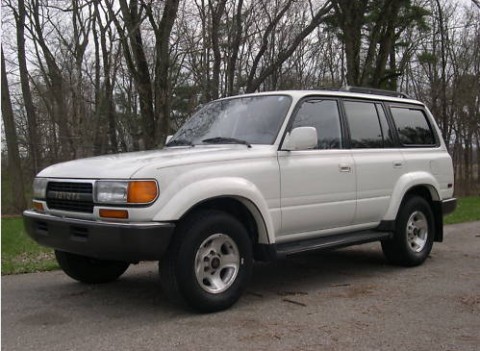
We have a Honda Odyssey, as I have mentioned before. I lovingly refer to this vehicle as the mom-rod.  I spend many miles off-road every year so a real 4x4 is a must for me, which is why I drive a Toyota Land Cruiser. With both a minivan and an SUV in the stable a perspective from both side of the issue can be presented. The Land Cruiser looks tough and rugged compared to the minivan, and it fits our kids and stuff okay, but the kids can't climb in by themselves very easily, and they can't even open the door when they are younger than about 6 years old (especially my micro-sized kids). Our Land Cruiser has a third row seat and if the kids are sitting back there you have to either fold the seat down for them, or let them climb over it with their muddy shows on. The amount of interior space for all of their stuff is tiny compared to the minivan. When they open the doors on the minivan they can’t fling the door into the car next to yours.

We could get a suburban that would hold all of our things with more room but then we're talking about spending more money for fuel, and it wouldn't fit very well inside our garage. With a Suburban you still have the door problem and the seat problem. In addition to that, the van handles better on the freeway and in traffic and is so much more comfortable to ride in. This is because it is not a truck.

Some would say, "Get a crossover because they get relatively good gas mileage, don't ride like a truck, and look cool" Something like the Mazda CX-7, Honda Pilot, or Chevy Traverse would fall into this category. I would say that the only thing a crossover gives you, versus an SUV, is maybe better gas mileage depending on overall vehicle size and engine options. The other things you get with a crossover is a lot less room than a minivan, and a lot less ability off-road, or for towing, or hauling heavy things. So you lose the advantages of the truck based SUV but you don't gain the advantages of the minivan. What do you gain by driving a crossover? Nothing that you can quantify. Everything that is thought to be good about a crossover is all in your head. I’m not saying that there is something wrong with driving exactly what you feel like driving, but for many people when it comes to hauling a family and all the peripherals associated there with, many people don’t care about appearances or what others think.

Minivan haters need to get over themselves, and realize that they don't understand, practicality beats style every day of the week when you are talking about a family hauler. I would guess that most minivan haters who have 2 or more kids have never had one a minivan, and if they had one, they wouldn’t be so harsh in their criticism of the van. In the end I say drive what you want, but it's silly to disparage minivan drivers for their practicality. I make more fun of people who drive trucky SUVs and never leave the pavement or tow anything with them. To me these people look nerdy.

The Auto Rules.